Skip to content
NeurologistCareCrystal Lake, IL · Woodstock, IL · Lake Geneva, WI

Neurology Video Library

What Is Frontotemporal Dementia?

Frontotemporal dementia, or FTD, refers to a group of neurological disorders caused by degeneration primarily involving the frontal and temporal regions of the brain. Unlike Alzheimer's disease, where memory problems are often prominent early, FTD may first cause significant changes in personality, behavior, judgment, language or communication—and it tends to occur at a younger age than many other forms of dementia.

Written and medically reviewed by Amarish Dave, DO, board-certified neurologist. This page is educational and does not replace an individual medical evaluation.

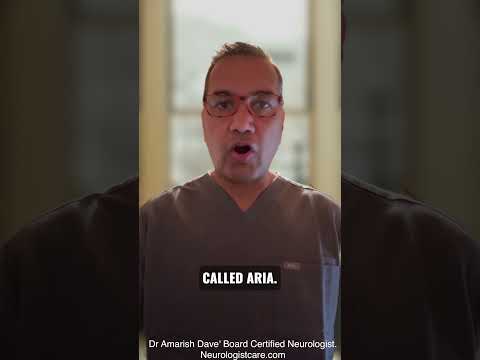
Video with Amarish Dave, DO, Board-Certified Neurologist

What are the early signs of frontotemporal dementia?

Symptoms vary depending on which brain networks are affected.

Behavior and personality changes

  • Loss of inhibition
  • Socially inappropriate behavior
  • Loss of empathy or concern for others
  • Apathy or loss of motivation
  • Impulsive behavior
  • Poor judgment
  • Repetitive or compulsive behaviors
  • Changes in eating habits or food preferences

Language changes

  • Difficulty finding or producing words
  • Difficulty understanding words
  • Changes in speech
  • Progressive difficulty communicating

Some forms of FTD can also be associated with movement problems.

How is FTD different from Alzheimer's disease?

Alzheimer's disease and FTD are different neurodegenerative disorders. Memory loss is commonly an early feature of Alzheimer's disease. In FTD, early symptoms may instead involve behavior, personality, executive function or language, while memory can sometimes remain relatively preserved early in the disease.

Symptoms overlap, so this distinction alone cannot diagnose either condition. Other disorders—including Lewy body dementia, vascular dementia and potentially treatable conditions such as normal pressure hydrocephalus — are also considered during evaluation.

FTD can sometimes look like a psychiatric problem

Because FTD can begin with personality, behavior or judgment changes, the initial symptoms may be interpreted as depression, another psychiatric disorder, relationship problems, or simply a change in personality.

A significant and progressive change in someone's usual behavior or personality— especially when accompanied by impaired judgment, language problems or difficulty functioning—deserves medical evaluation.

How is frontotemporal dementia diagnosed?

There is no single simple test that diagnoses every case of FTD. Evaluation may include:

  • Detailed history from the patient and family
  • Neurological examination
  • Cognitive testing
  • Assessment of behavior and language
  • Blood testing to look for other causes
  • Brain MRI or other imaging
  • Additional specialized testing when appropriate

Family observations can be particularly valuable, because someone experiencing behavioral changes may not recognize the changes themselves. Learn what happens during a dementia evaluation and what tests are ordered when evaluating dementia.

Can frontotemporal dementia run in families?

Genetics play an important role in some cases of FTD. A significant proportion of people with FTD have a family history of FTD or another related neurological disorder, and some cases are caused by identifiable genetic variants.

Genetic counseling or testing may be considered in selected patients, particularly when there is a strong family history or a relatively young age of onset. Whether testing is appropriate is an individual discussion.

Is there a cure for FTD?

There currently is no cure that stops or reverses the underlying neurodegeneration of FTD. Treatment focuses on managing symptoms, maintaining function and safety, supporting caregivers, and addressing behavioral, language, movement and other problems as they arise. Learn more about how dementia is treated and how lifestyle can impact dementia care.

Progressive changes deserve evaluation

Progressive changes in memory, thinking, language, personality or behavior should be evaluated by an appropriate healthcare professional. This information is educational and is not individualized medical advice.

Key takeaways

  • FTD is a group of disorders affecting primarily the frontal and temporal regions of the brain.
  • Early symptoms often involve behavior, personality, judgment or language rather than memory.
  • FTD usually begins at a younger age than many other forms of dementia.
  • Because early symptoms can resemble a psychiatric problem, progressive change deserves evaluation.
  • Diagnosis combines history from family, examination, cognitive and language assessment, blood work and imaging.
  • Genetics matter in some cases; counseling or testing may be considered in selected patients.
  • There is no cure, but symptom management, safety planning and caregiver support are important.

Frequently asked questions

What is frontotemporal dementia?
Frontotemporal dementia, or FTD, refers to a group of neurological disorders caused by degeneration primarily involving the frontal and temporal regions of the brain. Depending on which networks are affected, it can cause prominent changes in behavior, personality, judgment, language or, in some forms, movement.
What are the first signs of FTD?
Early symptoms often involve behavior and personality—loss of inhibition, socially inappropriate behavior, loss of empathy, apathy, impulsivity, poor judgment, repetitive behaviors, or changes in eating habits. In language-predominant forms, early symptoms involve difficulty finding, producing or understanding words.
How is FTD different from Alzheimer's disease?
They are different neurodegenerative disorders. Memory loss is commonly an early feature of Alzheimer's disease, while FTD more often begins with changes in behavior, personality, executive function or language, and memory can sometimes remain relatively preserved early on. Symptoms overlap, so this distinction alone does not diagnose either condition.
At what age does frontotemporal dementia usually begin?
FTD tends to begin at a younger age than many other forms of dementia, and it is one of the more common causes of dementia in people under 65. Age alone, however, does not establish or exclude the diagnosis.
Can FTD cause personality changes?
Yes. Significant changes in personality, social behavior, empathy, motivation and judgment are characteristic of the behavioral form of FTD, and these changes are often noticed by family before the person notices them.
Is frontotemporal dementia hereditary?
Genetics play an important role in some cases. A significant proportion of people with FTD have a family history of FTD or a related neurological disorder, and some cases are caused by identifiable genetic variants. Genetic counseling or testing may be considered in selected patients, particularly with a strong family history or relatively young age of onset.
How is FTD diagnosed?
There is no single simple test that diagnoses every case. Evaluation may include a detailed history from the patient and family, a neurological examination, cognitive testing, assessment of behavior and language, blood testing to look for other causes, brain MRI or other imaging, and additional specialized testing when appropriate.
Is there a treatment for frontotemporal dementia?
There is currently no cure that stops or reverses the underlying neurodegeneration. Treatment focuses on managing symptoms, maintaining function and safety, supporting caregivers, and addressing behavioral, language, movement and other problems as they arise.

Related memory and dementia videos

More medically reviewed neurology videos appear here automatically as they are published.

Video thumbnail for What Is Lewy Body Dementia?

Memory & Dementia

What Is Lewy Body Dementia?

Amarish Dave, DO explains Lewy body dementia, including changes in thinking and alertness, visual hallucinations, movement symptoms, and acting out dreams.

Watch Video
View all Memory & Dementia videos →

Enjoy these short answers? Subscribe to the NeurologistCare YouTube channel for additional short videos answering common questions about memory, dementia and neurological health.

Concerned about changes in memory, thinking, language, personality or behavior?

Learn more about comprehensive memory and dementia evaluation at NeurologistCare.com. In-person neurological and memory evaluations are available in Crystal Lake and Woodstock, Illinois, and Lake Geneva, Wisconsin, with telehealth available when appropriate for patients located anywhere in Illinois or Wisconsin.

Schedule a Neurology Appointment

Choose the scheduling line for the state where you will be located for your appointment.

In-Person Neurology Visits

Available at three office locations:

Crystal Lake, Illinois
Woodstock, Illinois
Lake Geneva, Wisconsin

Telehealth Neurology Visits

Telehealth neurology appointments are available to patients located anywhere in Illinois or Wisconsin. You do not need to live near an office, but you must be physically located in Illinois or Wisconsin at the time of the appointment.

Learn about telehealth neurology →

Call to schedule

Illinois appointments: 815-337-7100. Wisconsin appointments: 262-245-0535.

Choose your visit

Our office will confirm whether an in-person or telehealth visit is appropriate and provide the details.

Insurance and referrals

Insurance participation and referral requirements vary by plan. Our office will confirm what your plan requires before your visit.

If you believe you are experiencing a medical emergency, call 911 or seek emergency medical attention.