Stroke & Brain Health
What Is a Stroke?
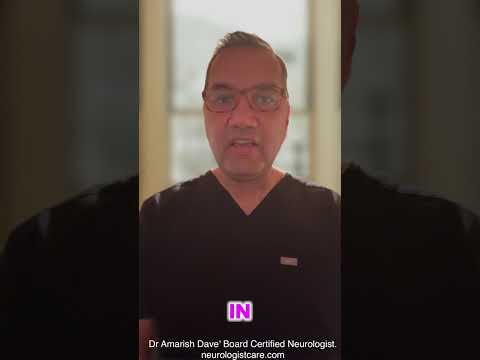
Amarish Dave, DO explains what happens during a stroke, why symptoms come on suddenly, and why every minute of emergency treatment matters.
Watch VideoStroke & Brain Health
Amarish Dave, DO, Board-Certified Neurologist, explains what happens inside the brain during a stroke, the two main types, the warning signs to act on, emergency treatments, and how to lower stroke risk.
Written and medically reviewed by Amarish Dave, DO, board-certified neurologist. This page is educational and does not replace an individual medical evaluation.
A stroke occurs when blood flow to part of the brain is interrupted, or when bleeding occurs within or around the brain. Brain cells depend on a continuous supply of oxygen and glucose carried by the blood. When that supply is disrupted, neurological injury can develop rapidly — which is why stroke is always a medical emergency.
The effects of a stroke depend on the location and extent of the brain injury. A stroke in the area that controls movement can cause weakness on one side of the body; one in a language area can affect speaking or understanding; one in the area governing balance or vision can cause dizziness or visual changes. Two people can have strokes of similar size yet very different outcomes, because different parts of the brain do different jobs.
Ischemic stroke happens when a blood vessel supplying the brain becomes blocked. Common mechanisms include blood clots forming in diseased arteries, clots traveling from the heart (including with the heart-rhythm disorder atrial fibrillation), atherosclerotic plaque narrowing the arteries, and small-vessel disease deep within the brain. Ischemic strokes account for approximately 87% of strokes in the United States.
Hemorrhagic stroke happens when a blood vessel ruptures, causing bleeding within or around the brain. The two main forms are intracerebral hemorrhage (bleeding directly into brain tissue) and subarachnoid hemorrhage (bleeding around the brain, often from a ruptured brain aneurysm). Uncontrolled high blood pressure is the leading risk factor for hemorrhagic stroke.
When blood supply is cut off, a cascade unfolds: oxygen and energy failure, disruption of neuronal electrical signaling, cellular injury and swelling, and finally loss of neurological function in the affected area.
Neurologists describe two zones of injury. The ischemic core is the region where blood flow has already stopped and brain cells are dying. Around it lies the penumbra — threatened tissue that is under-supplied but still salvageable. This is the entire rationale behind rapid treatment: restoring flow quickly can sometimes preserve the penumbra before it joins the core, which is why "time is brain" and every minute matters.
Learn B.E. F.A.S.T. — the letters stand for the most common sudden warning signs:
B
Balance — sudden loss of balance or coordination
E
Eyes — sudden vision changes
F
Face — facial drooping
A
Arms — arm weakness or numbness
S
Speech — slurred speech or difficulty speaking
T
Time — call 911 immediately
Other warning signs include sudden one-sided weakness or numbness, difficulty understanding language, or a severe unexplained headache. Not every stroke produces all of these symptoms — any one of them, coming on suddenly, is reason to act.
A transient ischemic attack (TIA) causes temporary neurological symptoms due to a brief interruption of blood flow to the brain, without acute brain injury (infarction) on imaging. The symptoms can be identical to a stroke — weakness, speech difficulty, vision changes — but they resolve. A TIA is an important warning sign of possible future stroke and should never be ignored. Symptoms resolving does not eliminate the need for emergency evaluation: you cannot tell a TIA from an ongoing stroke at the start. Read more in What Is a TIA?
Diagnosis begins with a neurological examination. Emergency noncontrast CT imaging is used to check for hemorrhage, and CT angiography is performed in appropriate patients to look at the brain's blood vessels. MRI is used in selected situations, and blood tests and cardiac evaluation help identify sources such as atrial fibrillation.
Emergency imaging matters because it helps distinguish ischemic from hemorrhagic stroke — and the treatments differ substantially. Giving a clot-dissolving medication to someone who is actually bleeding would be harmful, so imaging comes first.
Ischemic stroke treatment is time-sensitive. Intravenous thrombolysis — clot-dissolving medication such as alteplase or tenecteplase — may be given to eligible patients. Mechanical thrombectomy, a catheter-based procedure to physically remove the clot, can benefit selected patients with large-vessel occlusion.
Treatment eligibility depends on time from symptom onset, imaging findings, medical history, and other clinical factors. Not every patient is eligible, and not all strokes are treated identically — decisions are individualized by the emergency and stroke team.
Hemorrhagic stroke treatment focuses on blood pressure management, reversal of anticoagulation (blood thinners) when appropriate, neurological intensive care, and selected neurosurgical or endovascular interventions — for example, to secure a ruptured aneurysm. The thrombolytic medications used for ischemic stroke are not treatments for hemorrhagic stroke.
Many strokes are linked to modifiable risk factors. Working with your care team to manage these lowers risk:
Preventive medications depend on the underlying risk factors and may include blood pressure treatments, lipid-lowering therapy, antiplatelet medications such as aspirin, or anticoagulants when indicated — for example, for atrial fibrillation. Related vascular testing such as a carotid ultrasound can help assess artery narrowing in selected patients.
Recovery varies depending on stroke severity, location, treatment timing, and individual circumstances. Rehabilitation often involves physical therapy, occupational therapy, and speech therapy. Equally important is secondary stroke prevention — identifying why the stroke happened and treating those causes so another stroke is less likely. Cognitive changes after a stroke can also overlap with memory and cognitive concerns that deserve ongoing neurological attention.
A stroke can also affect language in specific ways — see What Is Aphasia? — and headaches can sometimes be confused with or complicate neurological conditions; learn more about migraine and headache (including migraine with aura). For a full overview of how neurological conditions are evaluated, see neurological evaluation and care.
Stroke & Brain Health
Amarish Dave, DO explains what happens during a stroke, why symptoms come on suddenly, and why every minute of emergency treatment matters.
Watch Video
Stroke & Brain Health
Amarish Dave, DO explains why a transient ischemic attack can cause stroke-like symptoms that improve quickly but still require emergency evaluation.
Watch Video
Stroke & Brain Health
Amarish Dave, DO, Board-Certified Neurologist, explains what a carotid ultrasound checks, why neurologists order it, and what the results may mean.
Watch Video
Stroke & Brain Health
Amarish Dave, DO explains aphasia — a language disorder caused by brain damage that can affect speaking, understanding, reading, and writing.
Watch VideoSubscribe to the NeurologistCare YouTube channel for more answers to common neurology questions.
Amarish Dave, DO
Board Certified Neurologist
Learn more about neurological conditions, diagnosis and treatment at NeurologistCare.com. For nonemergency neurological appointments, call Illinois: 815-337-7100 or Wisconsin: 262-245-0535. Consultations are available in person in Crystal Lake and Woodstock, Illinois, and Lake Geneva, Wisconsin, with telehealth options for eligible patients in Illinois and Wisconsin.
If you suspect a stroke, call 911 immediately. Do not request an outpatient appointment.
Choose the scheduling line for the state where you will be located for your appointment.
Available at three office locations:
Crystal Lake, Illinois
Woodstock, Illinois
Lake Geneva, Wisconsin
Telehealth neurology appointments are available to patients located anywhere in Illinois or Wisconsin. You do not need to live near an office, but you must be physically located in Illinois or Wisconsin at the time of the appointment.
Learn about telehealth neurology →Illinois appointments: 815-337-7100. Wisconsin appointments: 262-245-0535.
Our office will confirm whether an in-person or telehealth visit is appropriate and provide the details.
Insurance participation and referral requirements vary by plan. Our office will confirm what your plan requires before your visit.
If you believe you are experiencing a medical emergency, call 911 or seek emergency medical attention.