
Stroke & Brain Health
What is a stroke? Watch, It could save the life of a loved one
Amarish Dave, DO explains what happens inside the brain during a stroke, the warning signs to act on, and why calling 911 immediately can save a life.
Watch VideoNeurology Video Library
Amarish Dave, DO, Board-Certified Neurologist, explains what a carotid ultrasound is, why neurologists order this neck artery test, and what the results can mean for stroke risk.
Written and medically reviewed by Amarish Dave, DO, board-certified neurologist. This page is educational and does not replace an individual medical evaluation.
A carotid ultrasound is a noninvasive test that uses sound waves to examine the carotid arteries on each side of the neck. These arteries supply blood toward the brain. Doppler ultrasound can also measure the speed and direction of blood flow. Because a stroke can happen when a blood vessel to the brain becomes blocked, the carotid arteries are one of the places neurologists look for trouble before it happens.
A carotid ultrasound can help identify:
Carotid artery disease matters because plaque and narrowing can contribute to ischemic stroke risk. Plaque may reduce blood flow toward the brain, and pieces of plaque or clot can travel from the artery to the brain. That is why carotid findings are always considered alongside other stroke risk factors rather than on their own.
A neurologist may order a carotid ultrasound in several situations:
This does not mean everyone should receive a carotid ultrasound as routine stroke screening. Testing is most useful when the result will help answer a specific clinical question.
During a carotid artery ultrasound, gel is placed on the neck and an ultrasound probe is moved over the carotid arteries. The test is noninvasive, does not use radiation, and typically requires little preparation.
Doppler measurements allow clinicians to evaluate blood-flow velocity. When an artery is narrowed, blood flows through it faster, and the velocity measured with a carotid Doppler ultrasound helps estimate whether an artery is significantly narrowed.
Carotid stenosis means narrowing of a carotid artery, most commonly from atherosclerotic plaque — the same fatty, inflammatory material that builds up in arteries elsewhere in the body. Results may be described according to the estimated degree of narrowing, such as mild, moderate, or severe stenosis.
The right next step does not follow from a specific percentage alone. Management depends on multiple factors, including:
An abnormal result does not automatically mean someone needs surgery. Depending on the findings and the clinical situation, additional evaluation may include CTA or MRA of the arteries. Treatment may involve management of vascular risk factors and medications, while selected patients with significant carotid disease may be evaluated for procedures such as carotid endarterectomy or carotid artery stenting.
Controlling blood pressure, cholesterol, diabetes, and tobacco exposure remains important for reducing vascular and stroke risk — whatever the ultrasound shows. You can read more in our overviews of what is a TIA and what is a stroke, and in our guide to stroke and TIA follow-up care, which covers prevention planning and risk factor control.
Stroke warning signs are always an emergency. Sudden face drooping, arm weakness, speech difficulty, or other new neurological symptoms warrant calling 911 right away — do not wait to schedule imaging.
Stroke & Brain Health
Amarish Dave, DO explains what happens inside the brain during a stroke, the warning signs to act on, and why calling 911 immediately can save a life.
Watch Video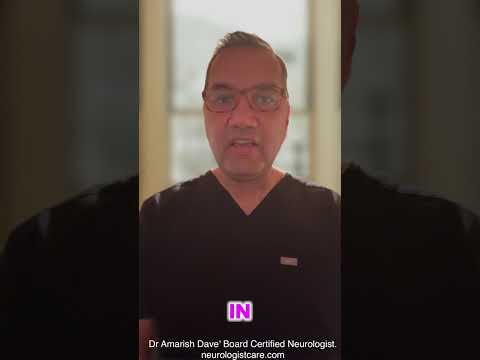
Stroke & Brain Health
Amarish Dave, DO explains what happens during a stroke, why symptoms come on suddenly, and why every minute of emergency treatment matters.
Watch Video
Stroke & Brain Health
Amarish Dave, DO, Board-Certified Neurologist, explains what a brain aneurysm is, why one forms, which risk factors matter, and when it becomes an emergency.
Watch Video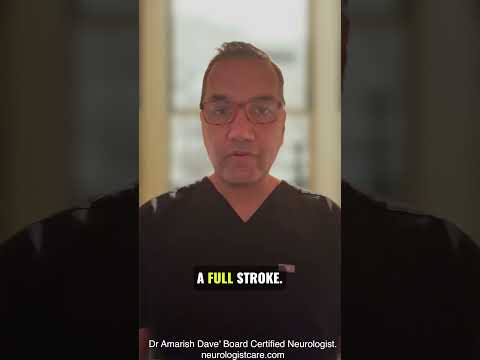
Stroke & Brain Health
Amarish Dave, DO explains why a transient ischemic attack can cause stroke-like symptoms that improve quickly but still require emergency evaluation.
Watch VideoSubscribe to the NeurologistCare YouTube channel for more short answers to common neurology questions.
NeurologistCare provides neurological evaluation and follow-up care for stroke, TIA, and vascular risk factors. In-person appointments are available in Crystal Lake and Woodstock, Illinois, and Lake Geneva, Wisconsin, with televisits available for appropriate patients in Illinois and Wisconsin.
NeurologistCare.com
Choose the scheduling line for the state where you will be located for your appointment.
Available at three office locations:
Crystal Lake, Illinois
Woodstock, Illinois
Lake Geneva, Wisconsin
Telehealth neurology appointments are available to patients located anywhere in Illinois or Wisconsin. You do not need to live near an office, but you must be physically located in Illinois or Wisconsin at the time of the appointment.
Learn about telehealth neurology →Illinois appointments: 815-337-7100. Wisconsin appointments: 262-245-0535.
Our office will confirm whether an in-person or telehealth visit is appropriate and provide the details.
Insurance participation and referral requirements vary by plan. Our office will confirm what your plan requires before your visit.
If you believe you are experiencing a medical emergency, call 911 or seek emergency medical attention.