Skip to content
NeurologistCareCrystal Lake, IL · Woodstock, IL · Lake Geneva, WI

Stroke & Brain Health

What Is a Stroke?

A stroke happens when blood flow to part of the brain is suddenly cut off. Knowing the warning signs — and calling 911 immediately — can save a life.

Written and medically reviewed by Amarish Dave, DO, board-certified neurologist. This page is educational and does not replace an individual medical evaluation.

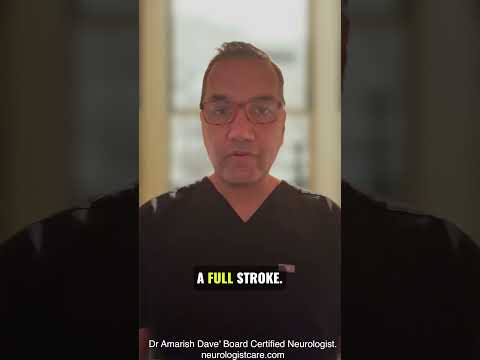
Video with Amarish Dave, DO, Board-Certified Neurologist

Direct answer

A stroke happens when blood flow to part of the brain is interrupted. Most strokes are ischemic — caused by a blocked artery. Others are hemorrhagic — caused by bleeding in or around the brain. Either way, brain cells begin to die within minutes, and the functions that part of the brain controls can be lost.

That is why stroke symptoms come on suddenly: weakness or numbness on one side of the face, arm, or leg; trouble speaking or understanding speech; vision changes; loss of balance; or a sudden severe headache. A stroke is always an emergency. Treatment is time-sensitive, and every minute matters — call 911 immediately.

If symptoms are happening now, call 911

This practice does not provide emergency stroke treatment. Sudden face drooping, arm weakness, speech difficulty, vision changes, balance loss, or sudden severe headache should be treated as an emergency even if symptoms improve or disappear.

Key takeaways

  • A stroke is an interruption of blood flow to part of the brain.
  • Ischemic strokes are caused by a blocked artery; hemorrhagic strokes by bleeding in or around the brain.
  • Symptoms start suddenly — weakness on one side, speech trouble, vision changes, or loss of balance.
  • Brain cells die within minutes: 'time is brain.'
  • Stroke is always an emergency — call 911, do not drive yourself.
  • Symptoms that disappear may be a TIA (mini-stroke), a warning sign for future stroke.
  • Many strokes are preventable by managing blood pressure, diabetes, cholesterol, heart rhythm, and smoking.

Use B.E. F.A.S.T.

B

Balance loss

E

Eye or vision changes

F

Face drooping

A

Arm weakness

S

Speech difficulty

T

Time to call 911

The American Stroke Association advises calling 911 for these warning signs and not ignoring symptoms that disappear. Symptoms that resolve quickly may be a TIA (transient ischemic attack) — a serious warning sign that still requires emergency evaluation.

Stroke vs. TIA

A TIA causes the same sudden symptoms as a stroke, but the blockage is temporary and symptoms resolve — sometimes within minutes. A TIA does not cause permanent damage on imaging, but it is a warning that a stroke may occur in the future. At the beginning, you cannot reliably tell a TIA from an ongoing stroke, which is why sudden symptoms always mean calling 911. Read more in What Is a TIA?

Reducing stroke risk

Many strokes are linked to risk factors that can be treated. Prevention and follow-up care focus on:

  • Blood pressure control
  • Diabetes and cholesterol management
  • Detecting and treating atrial fibrillation
  • Smoking cessation
  • Sleep apnea evaluation
  • Physical activity and heart-healthy eating
  • Medication review and adherence

After a stroke or TIA, ongoing stroke and TIA follow-up care helps manage residual symptoms and reduce the chance of another event. The same vascular health priorities support long-term brain health.

Frequently asked questions

What is a stroke?
A stroke happens when blood flow to part of the brain is interrupted, either by a blocked artery (ischemic stroke) or by bleeding in or around the brain (hemorrhagic stroke). Brain cells begin to die within minutes, which is why a stroke is always an emergency.
What is the difference between ischemic and hemorrhagic stroke?
An ischemic stroke is caused by a blocked blood vessel and is the most common type. A hemorrhagic stroke is caused by a burst or leaking blood vessel. Both interrupt the brain's blood supply and require emergency treatment.
What are the symptoms of a stroke?
Stroke symptoms come on suddenly: weakness or numbness on one side of the face, arm, or leg; trouble speaking or understanding speech; vision changes; dizziness or loss of balance; and sometimes a sudden severe headache.
Why is a stroke an emergency?
Treatments that can limit brain damage are time-sensitive. The sooner a person reaches emergency care, the more brain can potentially be saved. This is why doctors say 'time is brain.' Call 911 immediately — do not drive yourself or wait to see if symptoms improve.
What does B.E. F.A.S.T. mean?
B.E. F.A.S.T. stands for Balance loss, Eye or vision changes, Face drooping, Arm weakness, Speech difficulty, and Time to call 911.
What is the difference between a stroke and a TIA?
A TIA (transient ischemic attack) causes the same sudden symptoms as a stroke, but the blockage is temporary and symptoms resolve. A TIA is a serious warning sign of future stroke risk. At the start you cannot tell them apart, so sudden symptoms always require calling 911. Learn more: What Is a TIA?
Should you call 911 even if stroke symptoms go away?
Yes. Symptoms that disappear may be a TIA, which is a warning sign for a future stroke. The American Stroke Association advises calling 911 for sudden stroke warning signs even if they improve or disappear.
Can strokes be prevented?
Many strokes are linked to treatable risk factors: high blood pressure, diabetes, high cholesterol, atrial fibrillation, smoking, and sleep apnea. Managing these with your care team significantly reduces stroke risk.
What happens after a stroke?
After emergency treatment, follow-up neurological care focuses on recovery, managing residual symptoms, rehabilitation, and preventing another stroke through risk-factor control and medications.

Related videos

Continue with medically reviewed videos about stroke risk, brain health, and neurological warning signs.

Video thumbnail for What Is a TIA?

Stroke & Brain Health

What Is a TIA?

Amarish Dave, DO explains why a transient ischemic attack can cause stroke-like symptoms that improve quickly but still require emergency evaluation.

Watch Video
Video thumbnail for Can Dementia Be Prevented?

Memory & Dementia

Can Dementia Be Prevented?

Amarish Dave, DO explains why dementia cannot be prevented with certainty and how addressing modifiable risks may support long-term brain health.

Watch Video
Video thumbnail for Can Lifestyle Impact Dementia?

Memory & Dementia

Can Lifestyle Impact Dementia?

Amarish Dave, DO explains how physical activity, vascular risk factors, nutrition, sleep, social engagement, and cognitive activity fit into brain health and dementia care.

Watch Video
Video thumbnail for How Do We Treat Dementia?

Memory & Dementia

How Do We Treat Dementia?

Amarish Dave, DO explains why dementia treatment depends on the cause, stage, symptoms, health risks, safety needs, and goals of each patient and family.

Watch Video
Browse the Neurology Video Library →

Subscribe to the NeurologistCare YouTube channel for more short videos about brain health and neurological symptoms.

Need follow-up after a stroke or TIA?

NeurologistCare.com provides non-emergency follow-up after stroke or TIA and risk-factor review. In-person evaluations are available in Crystal Lake and Woodstock, Illinois, and Lake Geneva, Wisconsin, with telehealth available when appropriate for patients physically located anywhere in Illinois or Wisconsin at appointment time.

Medical disclaimer

This information is for general educational purposes and is not individualized medical advice. If stroke or TIA symptoms are happening now, call 911. Eligibility for outpatient follow-up, testing, and prevention treatment requires individualized medical evaluation.

Schedule Stroke or TIA Follow-Up

Choose the scheduling line for the state where you will be located for your appointment.

In-Person Neurology Visits

Available at three office locations:

Crystal Lake, Illinois
Woodstock, Illinois
Lake Geneva, Wisconsin

Telehealth Neurology Visits

Telehealth neurology appointments are available to patients located anywhere in Illinois or Wisconsin. You do not need to live near an office, but you must be physically located in Illinois or Wisconsin at the time of the appointment.

Learn about telehealth neurology →

Call to schedule

Illinois appointments: 815-337-7100. Wisconsin appointments: 262-245-0535.

Choose your visit

Our office will confirm whether an in-person or telehealth visit is appropriate and provide the details.

Insurance and referrals

Insurance participation and referral requirements vary by plan. Our office will confirm what your plan requires before your visit.

If you believe you are experiencing a medical emergency, call 911 or seek emergency medical attention.