Memory & Dementia
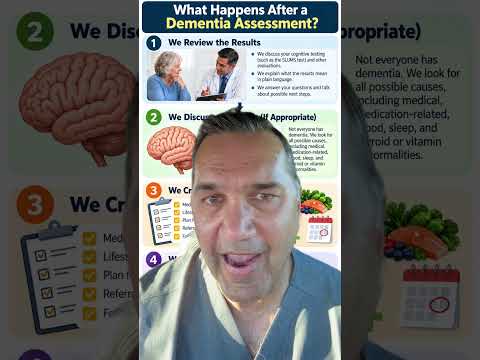
What Happens After a Dementia Assessment?
Amarish Dave, DO explains what happens after a dementia assessment: reviewing results, looking for the cause, determining a diagnosis and building a treatment plan.
Watch VideoNeurology Video Library
Amarish Dave, DO, Board-Certified Neurologist, explains important signs that memory or thinking changes may be more than normal aging.
Written and medically reviewed by Amarish Dave, DO, board-certified neurologist. This page is educational and does not replace an individual medical evaluation.
Memory changes deserve attention when they go beyond occasionally misplacing keys or briefly forgetting a name. Signs that may point to something more than normal aging include:
Occasional forgetfulness can occur with normal aging. But progressive cognitive changes—especially those affecting everyday function such as managing medications, finances, or appointments—should be medically evaluated. An evaluation clarifies what is changing and why; you can read more in our memory and dementia care guide, our overviews of dementia evaluation and memory testing, and what tests are ordered for dementia.
It is also important to know that memory problems are not automatically dementia. Sleep disorders, medications, depression, thyroid disease, vitamin deficiencies, and other medical conditions can sometimes contribute to cognitive symptoms, which is part of why a careful evaluation looks for causes that may be treatable. Learn how memory changes are distinguished in normal aging vs dementia and what happens during a dementia assessment, including how findings are reviewed and a diagnosis is determined in Alzheimer's disease and other conditions.
Families in Illinois can also find practical, caregiver-focused guidance in the free Illinois Dementia Guide.
Memory & Dementia
Amarish Dave, DO explains what happens after a dementia assessment: reviewing results, looking for the cause, determining a diagnosis and building a treatment plan.
Watch Video
Memory & Dementia
Amarish Dave, DO, Board-Certified Neurologist, explains newer Alzheimer's blood biomarkers, who should get an Alzheimer's blood test, and who should not.
Watch Video
Memory & Dementia
Amarish Dave, DO, Board-Certified Neurologist, explains how families can tell when someone with dementia is no longer safe living alone.
Watch Video
Memory & Dementia
Amarish Dave, DO explains the difference between dementia and Alzheimer's disease—dementia is an umbrella term for symptoms, while Alzheimer's is its most common cause.
Watch VideoSubscribe to the NeurologistCare YouTube channel for more short answers to common neurology questions.
NeurologistCare provides memory and dementia evaluations in Crystal Lake and Woodstock, Illinois, and Lake Geneva, Wisconsin. Telehealth is also available for appropriate patients located in Illinois or Wisconsin.
Choose the scheduling line for the state where you will be located for your appointment.
Available at three office locations:
Crystal Lake, Illinois
Woodstock, Illinois
Lake Geneva, Wisconsin
Telehealth neurology appointments are available to patients located anywhere in Illinois or Wisconsin. You do not need to live near an office, but you must be physically located in Illinois or Wisconsin at the time of the appointment.
Learn about telehealth neurology →Illinois appointments: 815-337-7100. Wisconsin appointments: 262-245-0535.
Our office will confirm whether an in-person or telehealth visit is appropriate and provide the details.
Insurance participation and referral requirements vary by plan. Our office will confirm what your plan requires before your visit.
If you believe you are experiencing a medical emergency, call 911 or seek emergency medical attention.